
Our specialty
Powder
coating
We do not coat wheels just so they shine on the day you collect them. We do it so they last for years on the road: preparation down to clean metal, a primer, colour and clear coat system, and curing with the temperature of the metal itself measured.
- 1 day by appointment
- Temporary spare wheels so you are never without your car
Why powder coating
And not liquid paint.
-
It is cured, not just dried
The powder melts and cross-links in the oven. The result is a hard, continuous film, not a layer of paint that simply dried.
-
Built for the road
Much higher resistance to stone chips, wheel cleaners and everyday wear than liquid paint.
-
Measured thickness
We measure the thickness on spokes, edges and recesses. Never too thin on the corners, never overloaded.
-
Materials made for wheels
Powders made for wheels, in a complete system: primer, colour and clear acrylic coat.
The process
8 steps. None are skipped.
-
01
Inspection
We check the wheel for cracks, bends and old repairs. Anything that needs repair is done before coating.
-
02
Paint removal
The old paint is removed completely, by sandblasting, glass bead or aqua blasting depending on the wheel, down to clean metal.
-
03
Degreasing & pretreatment
This is where adhesion is decided. Chemical preparation for aluminium, and from here on the wheel is only handled with gloves.
-
04
Pre-baking
Cast aluminium releases gases when heated. We drive them out before coating, so no bubbles appear later.
-
05
Masking
The hub contact face, the bolt seats, the centre bore and the valve hole are not coated, so the bolts do not come loose.
-
06
Primer & colour
Wheel primer and on top the colour you chose, at the right thickness.
-
07
Curing
The time counts from the moment the metal itself reaches temperature, not the oven.
-
08
Clear coat & inspection
Clear acrylic coat for wheels, a second cure and a thickness check before the wheel goes back on the car.
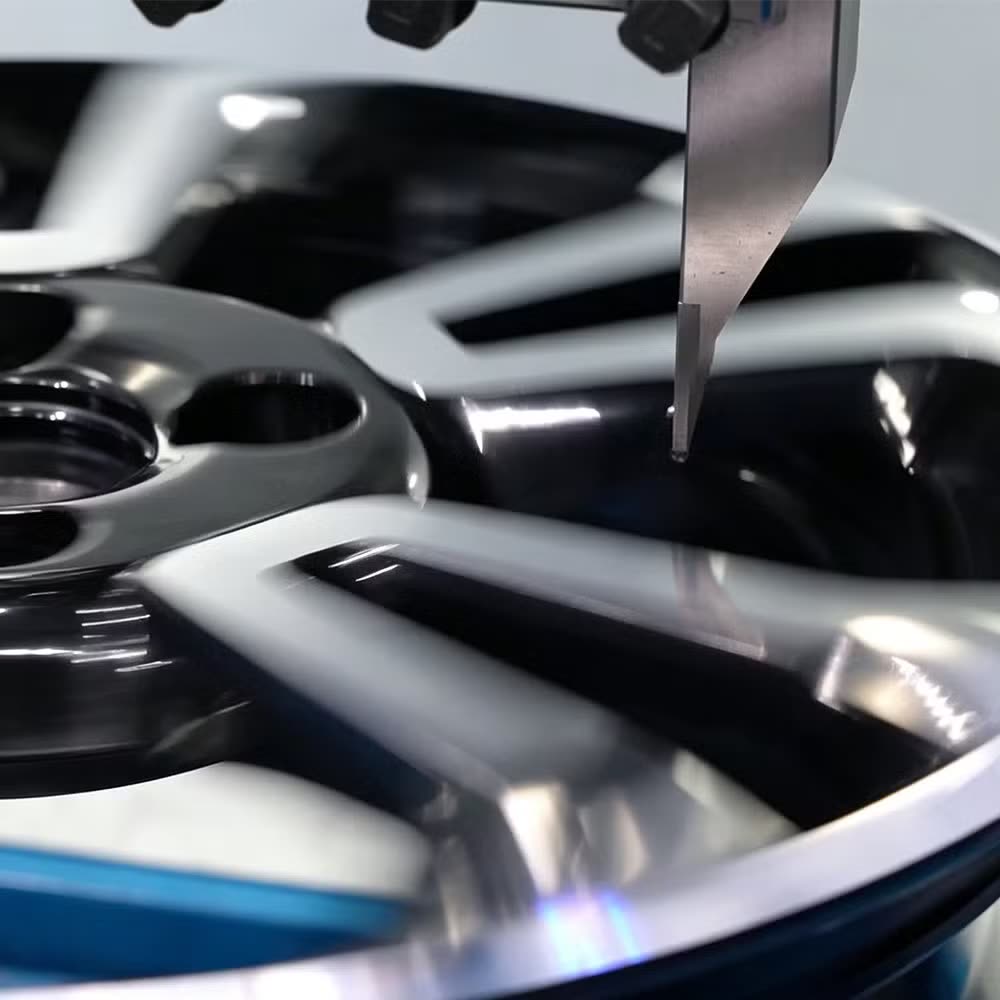
Diamond-cut · CNC
The bright “cut” finish
After coating, the CNC lathe removes a very thin layer from the face of the wheel and leaves the aluminium shining next to the colour, just like factory two-tone wheels.
Machined aluminium is bare and oxidises quickly. That is why we gently break the edges, clean the lathe coolant off the wheel and clear coat it within a few hours. This way the clear coat does not crack at the corners and no “worms” appear underneath.
Finishes
Ask us about the available colours.
- Matte
- Satin
- Gloss
- Two-tone diamond-cut
Frequently asked questions
How many days does wheel coating take?
1 day, by appointment.
Am I left without my car while the wheels are coated?
No. We fit temporary spare wheels to your car, so you can use it as normal until your wheels are ready.
What is the difference between sandblasting, glass bead and aqua blasting?
Sandblasting removes paint and corrosion down to bare metal. Glass bead blasting, using glass beads, is gentler: it removes almost no material and leaves a smooth satin surface, which is why it is the method for finishing aluminium. Aqua blasting uses water: it is gentle and raises no dust. We choose the right one for each wheel.
What is the difference between powder coating and liquid paint?
The powder is applied electrostatically, then melts and cross-links in the oven. It forms a hard, continuous film that resists stones, cleaners and wear far better than liquid paint, and without solvents.
Do the tyres have to come off for coating?
Yes, the wheel is coated bare. We remove and refit the tyres in the shop and balance the wheels.
Can a scratched or bent wheel be coated?
Yes. The wheel is repaired first and then coated, so the final result is right and not just pretty.
How do I look after a coated wheel?
Wash with a neutral car shampoo. Avoid strong acidic wheel cleaners and holding a pressure washer very close to the edges.